
Where Idaho County Crime News Appears
Idaho County's news scene is small and scattered. No daily mugshot feed exists anywhere in it. The Idaho County Free Press in Grangeville covers county affairs, though it has no dedicated online arrest category. KOZE and Dailyfly write up law-enforcement incidents when something warrants attention. KIVI, Idaho News 6, may pick up a major incident too. The Sheriff's Office supplies some reports and photos, but its current-inmate page is the official custody reference.
Coverage is selective. A story can name a booking, quote the sheriff, and run an agency photo. It can even follow the case into court. Still, it cannot show every booking in the county or prove an image is current. For the countywide roster, booking-record requests, courts, DOC, and release alerts, start at the Idaho County records hub.
Idaho County Outlets and Coverage
The outlet table below splits what checks out from what is assumed. A check in the Photos column means an image ran in a story. It can also mean the outlet's photo practice was visible there. It does not promise a complete photo archive.
| Outlet | Coverage | Photos? | Where to look |
|---|---|---|---|
| Idaho County Free Press | Local county news, with a Grangeville and surrounding-area focus | Booking-photo cadence not established | Newspaper site |
| KOZE | Regional event-driven crime and arrest reports, including Kamiah, Kooskia, Riggins, and wider Idaho County | Sometimes, including Sheriff-attributed images in reviewed stories | KOZE newsroom |
| Dailyfly News | Regional local-news stories, including Idaho County and Kamiah-area arrests | Sometimes, with a reviewed story crediting the Idaho County Sheriff | Dailyfly local news |
| KIVI / Idaho News 6 | Major county incidents and state-agency releases | Not established as a mugshot feed | Reviewed county example |
| Idaho County Sheriff’s Office | Originating agency information and current custody page | Official current-inmate page displays photos | Sheriff’s Office |
| Grangeville Police social feed | Municipal announcements and agency communication | Not labeled an arrest or booking feed | Police Facebook Feed |
| Third-party aggregators | Selective or volatile republication | Unofficial and potentially stale | Review the caveats below |
KOZE and Dailyfly are the two strongest links between a sheriff's release, an offense report, a booking, and the court story that follows. Use them for leads. The county custodian still holds the record.
KOZE and Dailyfly Arrest Stories
A KOZE Idaho County story carries Idaho County and Kamiah tags. It names the sheriff as its source and includes an article image. This is an event story, not a daily roster. The location and agency references still help. They can route a later check to the county jail or to whichever municipal or contracted agency made the arrest.
A Dailyfly Idaho County story credits the Idaho County Sheriff's Office and tracks the case toward court. A sheriff-supplied photo in a news article does not make the news site the custodian. Anyone who needs the booking record should go through the sheriff's written-request process.
Stories often carry names, dates, locations, and case clues the public roster leaves out. Use those clues to search iCourt. Then confirm what you find with the issuing court or agency. A story can be corrected, updated, or pulled entirely. The public record lives on elsewhere.
The image below comes from the KOZE source page. It is context, not a local gallery.
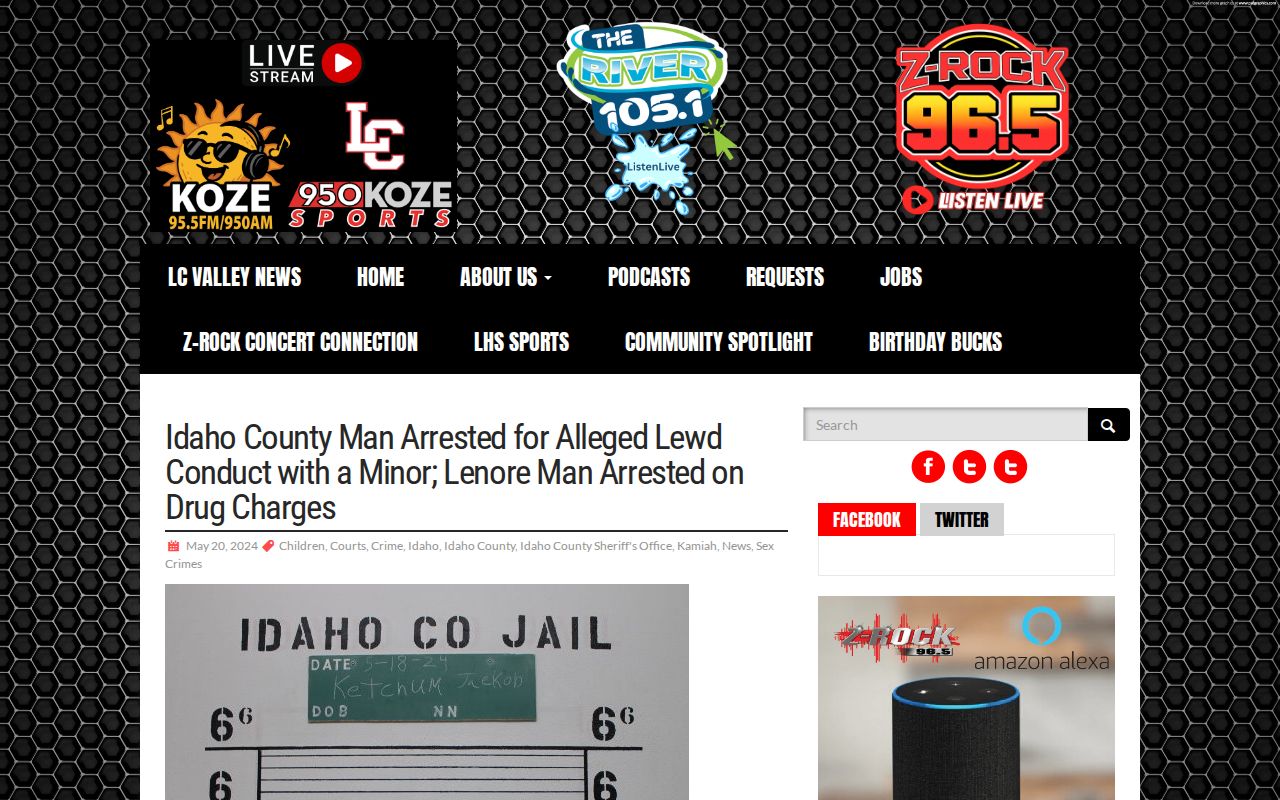
The capture makes the attribution point plain: the outlet tells the story, while the Sheriff or the court keeps the record that counts.
County Paper and Regional Coverage
The Idaho County Free Press is a genuine weekly county newspaper. But its site offers no stable arrest section, no daily cadence, and no searchable booking archive. It works for local context, not for a current jail check. KIVI's Idaho County incident shows the regional television pattern. A major event gets reported from an Idaho State Police release, with booking or arrest detail buried inside a broader story.
Clearwater Progress sits nearby geographically. Yet the law-enforcement item found there concerned Lewis County, not a verified Idaho County booking section. That distinction matters around Kamiah and the Clearwater region. A nearby story should never be relabeled as Idaho County coverage until the agency and location check out.
City reporting follows different agency paths. Grangeville, Kamiah, and Cottonwood each have their own. A municipal arrest may sit with that police department or a contracted sheriff, while someone booked at Idaho County Jail appears on the county list. The city pages explain those boundaries and link back to the county source where it fits.
The Dailyfly local-news category supplies the regional context for the capture below. It is not a Cottonwood, Grangeville, or Kamiah booking feed.

The Dailyfly capture shows regional crime coverage at work. Read it as a selective report, and verify against the official roster and court record.
How Booking Photos Reach Idaho County News
Where do the pictures in local news come from? Three routes are common. A paper may print a photo handed over by the Idaho County Sheriff's Office, get one through a records request, or pull an image already sitting on an official custody page. None of it runs on a fixed timetable. The county posts no written photo-release policy, no posting threshold, and no rule about when images go online. Idaho Code section 20-601 lays out the booking process, photograph included, but it sets no schedule for news publication.
Idaho public-records law tilts toward access. Photos are presumed open, though investigatory, juvenile, and sealed-record exemptions can change that case by case. So an outlet's decision to publish is separate from a custodian's duty to post. A reporter can hold a released photo that never touches the roster, and a roster image can stay out of the news for good.
A story is a snapshot, not a full case file. News reports mark a moment early in the process, and details change as matters move through court, so check iCourt for later hearings and outcomes.
Corrections work best when you separate the pieces. The outlet handles fixes to its own article. The originating agency handles factual errors in the record itself. Legal relief goes through the court or BCI process where it qualifies. One more thing to keep in mind: editing a single page never wipes out the independent copies elsewhere.
Unofficial Mugshots in the News
Third-party mugshot sites treat Idaho County inconsistently. Mugshots.com lists an Idaho state directory, but its Idaho County link and photo count shift from one visit to the next. Neither the link nor the number reflects a real booking total. It is not a roster, not a count of distinct people, and not tied to any case outcome. The local path may redirect or vanish without notice.
Coverage gaps are just as telling. Busted Newspaper's Idaho index showed no Idaho County section, and its direct local path could not be confirmed. The RecentlyBooked Idaho index left Idaho County off its list as well. Arrests.org Idaho covers selected counties only, Idaho County not among them. Mugshots.zone also had no verifiable Idaho County section. Absence today is not a promise about tomorrow, though. Any of these publishers could add a page at any time.
Treat all of them as unofficial and often stale. They should never lead a search or serve as an authority on photos. Some publishers offer free, document-based corrections; use those only when the official record or a court order backs the request. Skip anyone selling removal promises. That is not part of the lawful source path.
The Mugshots.com Idaho directory sits behind the secondary-index capture shown below. Its county link and count change often and stand apart from the official Idaho County roster.
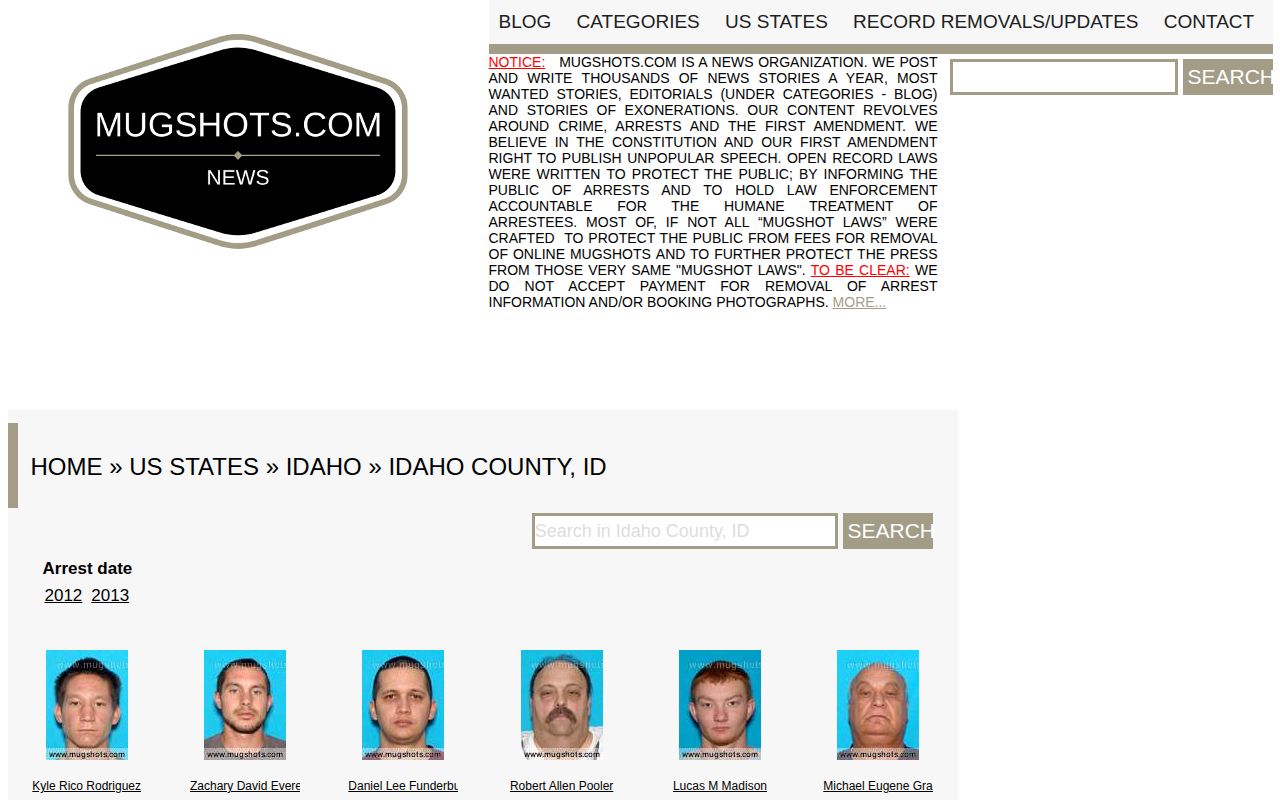
That directory capture shows a secondary index at work. It is not an official Idaho County booking page, and it belongs behind the sheriff, court, and records-request routes.
From Idaho County News to the Record
A news story makes a decent first clue. The trick is keeping every source in its proper lane as you follow up.
- Save the story’s date, location, agency, name spelling, and any case number. Do not treat the headline as a final charge or result.
- Check the Idaho County Current Inmate List when the person may still be in county custody. A release or transfer can make the roster differ from the story.
- Use the Sheriff’s Records Division for a specific booking record or photograph when the public page does not show the field.
- Search the Idaho iCourt Portal for the case, hearings, charging document, and later disposition. Sealed or exempt cases may not appear.
- If the person moved to state custody, compare the county record with IDOC. If federal or immigration custody is indicated, use the applicable federal locator.
Staying disciplined keeps a lead from hardening into a wrong conclusion. Charges get reduced or dropped. Cases end by plea or by trial. A booking photo can linger online long after a release. For the final word, the official record and the court disposition always win.
Arrest Rates Are Not Mugshot Counts
Idaho State Police's county-agency report puts Idaho County arrest rates at 2,445 per 100,000 in 2022, 2,468 in 2023, and 1,884 in 2024. Those are NIBRS Group A and B arrest-rate figures. They do not count jail bookings. They do not count posted photos, unique people, news stories, or convictions.
The difference matters when you read crime coverage. A rate supplies broad context. The roster answers a custody question. A court record answers a case-outcome question. Cottonwood's missing 2023 NIBRS submission shows why one reporting layer cannot speak for every local record. For an individual matter, go to the agency and the courts.
Naming the measure makes any story sharper. A report can call something a booking, label a rate as an NIBRS statistic, or describe an iCourt entry as a public case event. Each label has limits, and none should be stretched beyond what it actually says.